Tsow-Tun Le Lum
“Helping House.” A place to rest, to grieve, to come back to yourself.
We are an Indigenous-led society on Vancouver Island offering live-in substance use, trauma and grief programs, and ongoing cultural support for survivors and their families. Add Text real time.
Healing here has an order to it
First stage steadies the body. Second stage goes to what sits underneath it. Support continues after you go home.
 First Stage
Thuy Na Mut
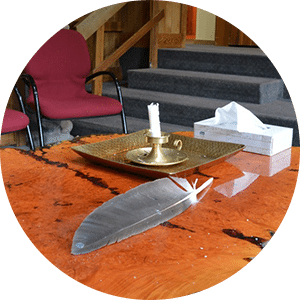
A live-in “First Stage” substance use program at the Centre in Duncan.
Learn More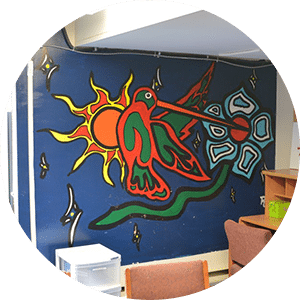 Second Stage · Trauma
Kwunatsustul
Second Stage Program: Trauma — requires 6 month sobriety.
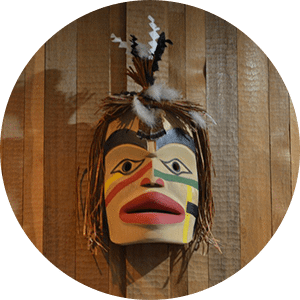
Two marks that carry the whole idea of this place
 Split Wolf With Human Hands
Transformation
Clients in treatment have realised that they have negative and positive personality traits. Often times we allow animal instincts to dominate our lives. We fail to control our appetites.
Treatment helps us turn away from all that is negative and seek out all that is good in our humanity. The "Split Wolf" may be interpreted as the emergence of the humane (the good, the positive side of the personality, as well, the hands may be seen along a vertical axis, one pushing away from all negativity, the other drawing toward everything positive.)
The use of an earth-tone red, should be a rather obvious symbol; the choice of the wolf design may not be quite so obvious. On the West Coast, wolves represent authority, law and order, and control. Clients certainly will be seeking self-control. Also, wolves are known for their intelligent co-operation during their hunts. Clients, too, will want to help each other as they search for their stronger self and healthier lives.
The white star created by the junction of the heads and hands, symbolizes the light at the end of the tunnel, so to speak. Everyone seeking treatment is also seeking enlightenment. Treatment should improve the health of the body and mind, enlightenment is treatment of the spirit.
Ron Hamilton: Artist and designer of our logo
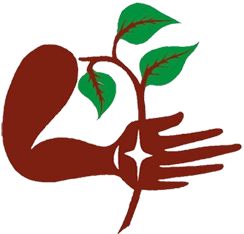
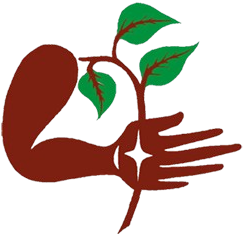 A Helping Hand
Medicine
In order for someone to become a client in treatment, they must have sought out help; they have to have said, “I have a problem, I must look for help.” The treatment centre provides a nutritious diet and regulates waking and sleeping hours. This regularity begins to heal the body. It is the client’s responsibility to maintain their regularity after treatment. The centre provides counselling to identify mental health problems, and the group sessions along with counselling are aimed at healing the mind. Ultimately each client will realize that practicing alcoholics are spiritually sick. They will then begin a spirit quest; to identify a higher power capable and providing them with strength, determination, and inspiration; to struggle with whatever problems life provides daily.
The arm and hand have no face attached, because each individual decides for themselves, where their help is coming from; still it is meant to be interpreted as a helping hand. The star represents enlightenment, realization, and awakening. The three leaves on the sprig of medicine are meant to indicate that alcoholics are never through with the process of healing themselves; that each day must be taken as it comes.
Originally the plan was for a face to be included in the design, representing the staff at the centre and also the “complete number” of four leaves were planned. I feel the alcoholic never ceases to require “medicine” and so the three leaves.
Ron Hamilton
October 18, 1987
For people coming, families waiting, and workers referring
Everything you may need before, during and after a stay with us.
Visit, call, or write to us
2850 Miller Road, Duncan, BC, V9L 6V6
(250) 390-3123 · Mon–Fri 9:00am–Noon & 1:00–4:00pm
1-888-403-3123 · Mon–Fri 8am–8pm, weekends & holidays 10am–2pm